

AI Operating Layer Review
Fix one workflow before you add another AI tool.
We trace one workflow from start to finish, find where it breaks, and build the smallest useful system around it. Your team can see the work, approve the important moves, and know what happened.
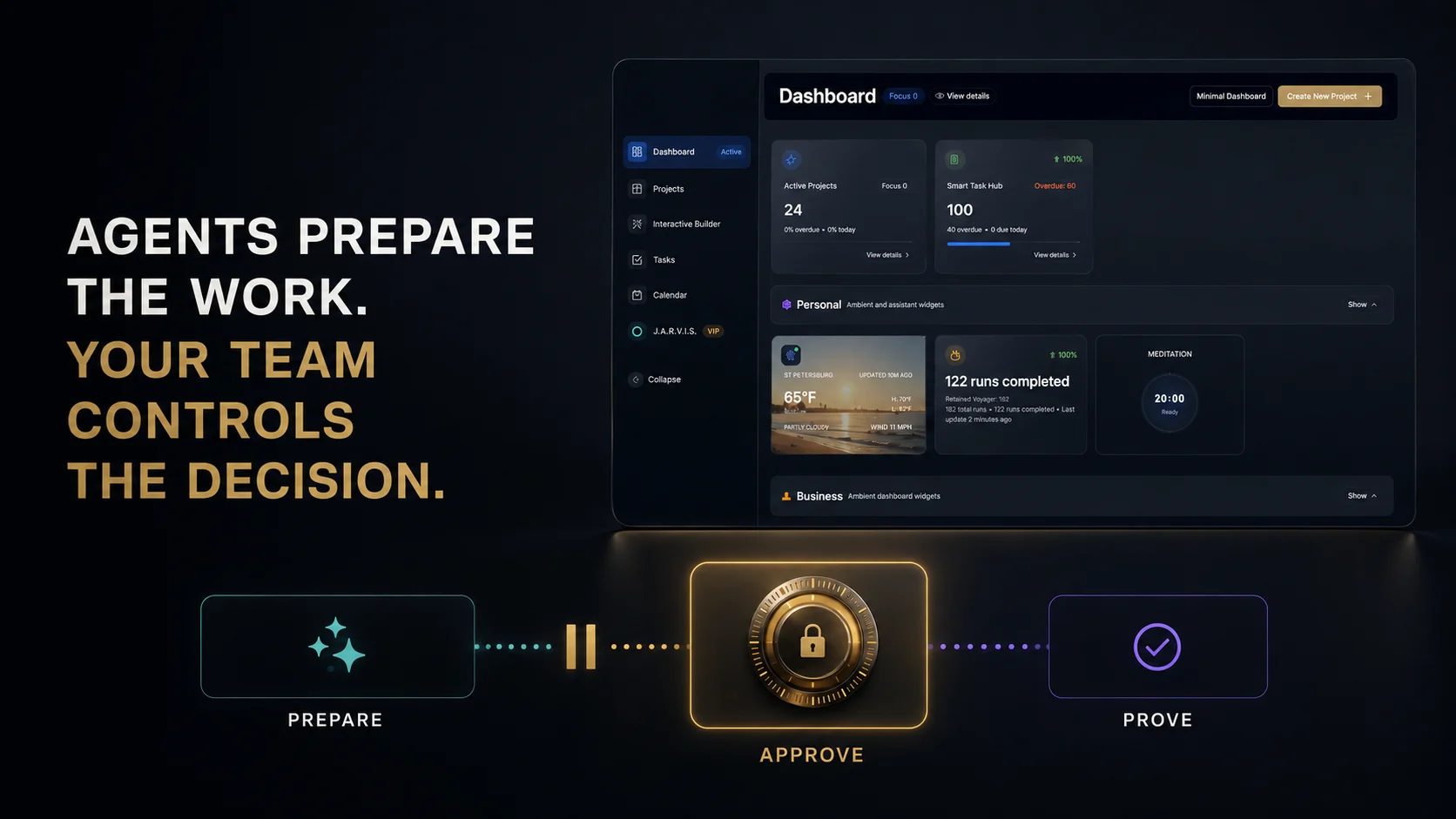
The problem
More AI will not fix a workflow nobody understands.
The buyer does not need another isolated demo. They need to know which workflow deserves AI support, what must stay human-approved, and what first operating loop would create visible value.
AI tools are active, but the work still runs through inboxes, meetings, Slack, spreadsheets, CRM notes, and tribal memory.
Follow-up, reporting, and handoffs depend on individual heroics instead of a visible operating loop.
Leaders cannot easily see what happened, what changed, what needs approval, or what should happen next.
The company wants AI help without giving agents permission to make risky commitments.
See the work clearly
If people cannot see how the work moves, automation will only hide the mess.
The useful pattern is simple: capture the request, keep the right information attached, assign an owner, require approval where it matters, follow up, and record what changed.
Lead intake, qualification, follow-up, and booked-review handoffsUniversity-style operations, hospitality systems, and founder-led workflow visibilityAutomation status, approvals, receipts, and performance signals in one place
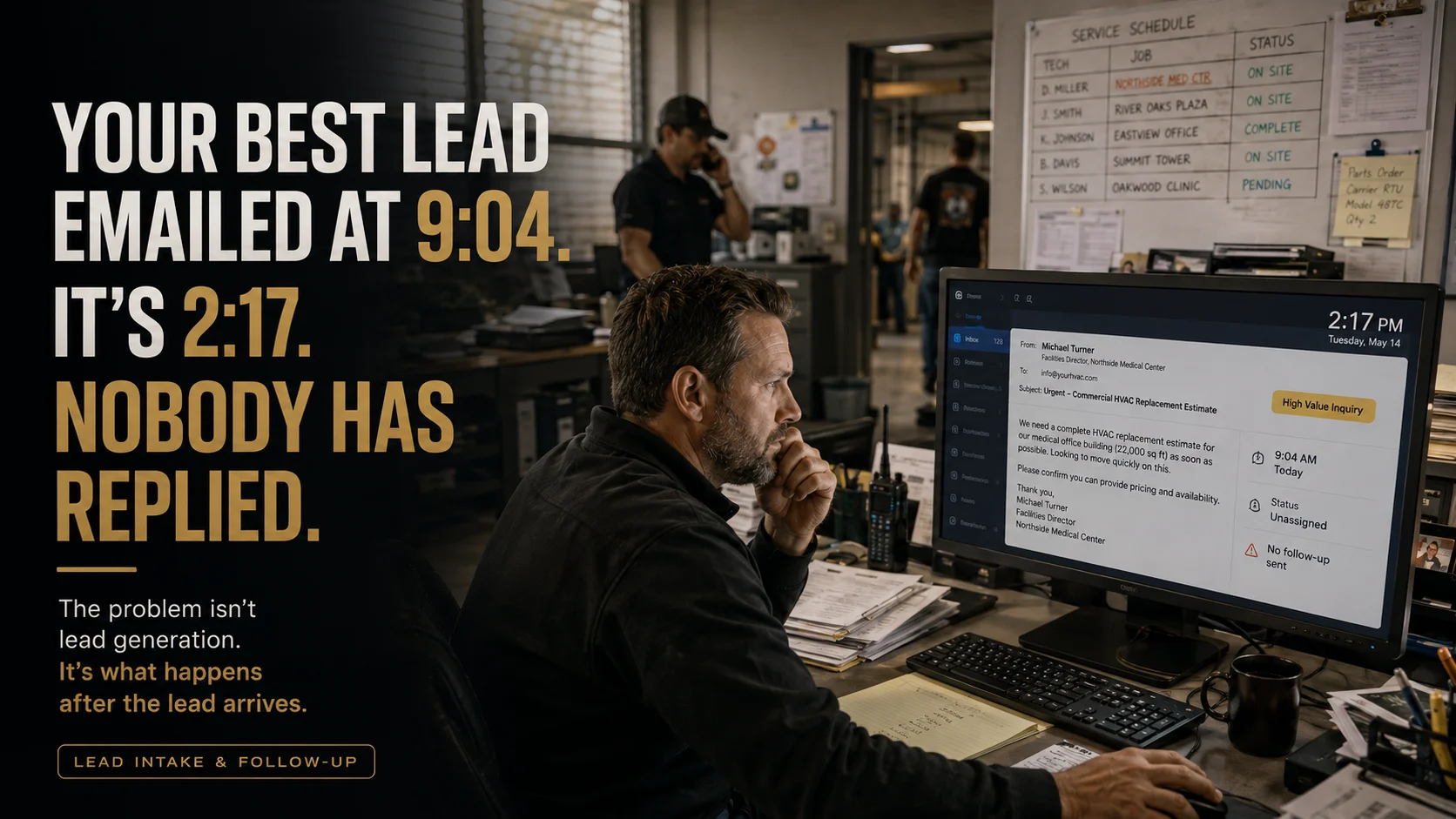
Review questions
Before recommending a system, the review makes the problem harder to ignore.
The point is not to pitch AI harder. It is to understand the workflow, the cost of leaving it alone, and the first operating loop a buyer would actually use.
Where is work getting stuck after the first request, lead, meeting, or decision?
How long has the team been living with that gap, and what has already been tried?
What does the current gap cost in missed follow-up, slow decisions, rework, or lost visibility?
What happens in 90 days if the workflow stays scattered across people, tools, and memory?
Who owns the workflow, and what would they need to see each week to trust that it is improving?
Which decisions should agents prepare, and which moves should still require human approval?
Explore a working blueprint
Choose the handoff that keeps breaking.
Choose an operating problem, then follow the context, owner, preparation, approval, and receipt. This is a simulation; no business action is executed.
Intake · sample record
A new service inquiry
Intake attached to the work
- Context
- Original request preserved
- Owner
- Not assigned yet
- Decision
- Pending human review
Step 1 / 6
The request has an operating home.
The request enters one visible queue instead of remaining an isolated message.
1 / 6
Proof patterns
Start where repeated work is already leaking value.
The review is designed to find one loop where better intake, context, preparation, approval, and follow-up would matter quickly.
Lead intake and qualification
Website, referral, or campaign traffic becomes structured context, fit scoring, internal briefs, follow-up drafts, and booked conversations.
Client delivery visibility
Projects, notes, deliverables, approvals, blockers, and next actions live in one place instead of scattered status updates.
Executive briefing loop
Agents prepare concise summaries from meetings, docs, CRM, tasks, and inbox context so leaders can decide faster with a receipt trail.
CRM and follow-up hygiene
Relationship signals, stale opportunities, research, and recommended next moves are surfaced before revenue leaks out of the system.
Flagship workflow proof
See the Lead Intake & Follow-Up operating loop.
Follow one fictional commercial HVAC inquiry through research, qualification, human approval, CRM handoff, personalized follow-up, and an operating receipt.
Engagement model
The first 2 to 6 weeks should produce something your team can actually use.
We keep the scope narrow: review one workflow, build the first useful version, test it with real work, and expand only if it earns the right.
01
Review the live workflow
Map one workflow, its owner, context sources, handoffs, decisions, risks, current tools, and the value of fixing it.
02
Design the first useful system
Define what comes in, what agents prepare, what people approve, what gets recorded, and what the owner needs to see.
03
Install the first loop
Build the smallest usable version, train the owner, document the routine, and run it against real work.
04
Decide what expands
Use adoption, receipts, risk, and operating value to decide whether to extend, integrate, retain, or stop.
Best fit
Teams with a recurring problem, a clear owner, and the will to fix it.
- Founder-led, operator-led, or revenue-led teams with repeated work that already has business value.
- Companies with scattered intake, follow-up, reporting, CRM, delivery, approval, or decision loops.
- Leaders willing to expose the real workflow, assign an owner, and keep humans in the loop where trust matters.
- Teams with enough urgency and budget to move from review into a working first version.
Not a fit
AI theater, cheap templates, and ownerless workflows will not compound.
- A request for a cheap chatbot, prompt pack, or AI demo without a workflow owner.
- AI activity where nobody owns adoption, permissions, review, access, or follow-through.
- Very small operations with no repeated process, margin, urgency, or implementation budget.
- Teams expecting agents to replace judgment instead of improving visibility, preparation, and follow-through.
Call flow
The first call should pressure-test the workflow, not sell a vague transformation.
We look at one live workflow, find where information or follow-up gets lost, decide what still needs human approval, and judge whether a focused build would actually help.
InquiryWorkflowLayer reviewControl plane
AI Workflow Audit intake
Show us the workflow that keeps letting you down.
Tell us where the work is scattered, what keeps getting missed, and what your team needs to see sooner. We will focus the first conversation on one practical fix.
1 · Find what is breaking2 · Name the business impact3 · Choose the first useful fix
Recommended entryAI Workflow Audit
Start here
If the work is scattered, fix the workflow before adding more AI.
Start with one real workflow. Show us where it breaks, what gets missed, who owns it, and which decisions still need a person.