Offers

Fixed-scope paths from AI interest to a better way of working.

ALCH3MY packages the work the way serious buyers need it: clarify the real constraint, make the system tangible, then install the operating layer only when the case is clear. OpenClaw comes in when a company needs agent support around real workflows.

Engagement logic

The strongest wedge is the AI Operating Layer Review: diagnose one live workflow, define the trust boundary, and install only what the business can use.

  • Lead with workflow pressure, ownership, and a clear decision outcome.
  • Prototype the first control-plane loop before a larger build.
  • Expand only when proof, adoption, and governance justify iteration.

Primary consulting lane

AI Operating Layer Review for companies ready to make AI accountable to real work.

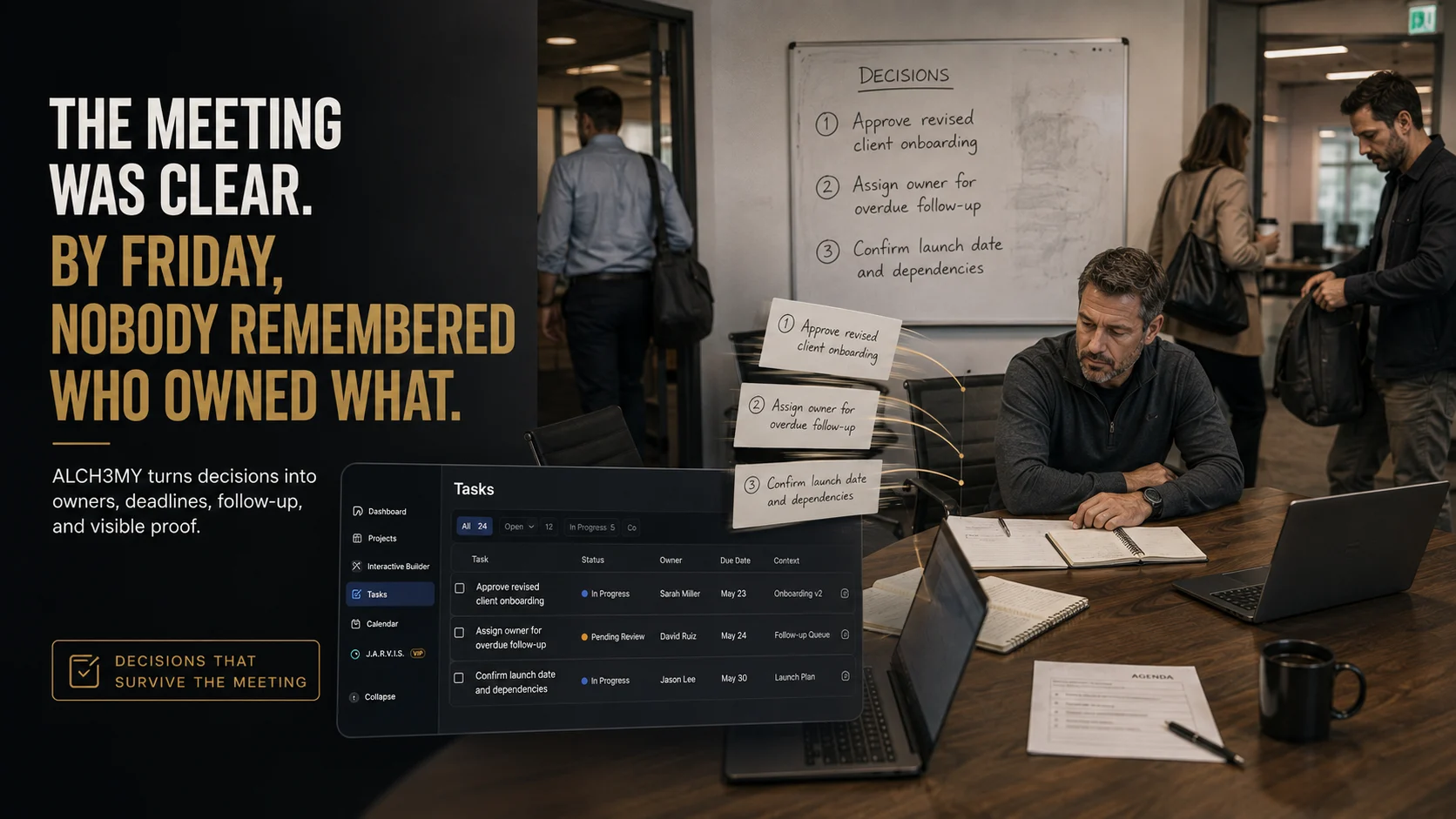
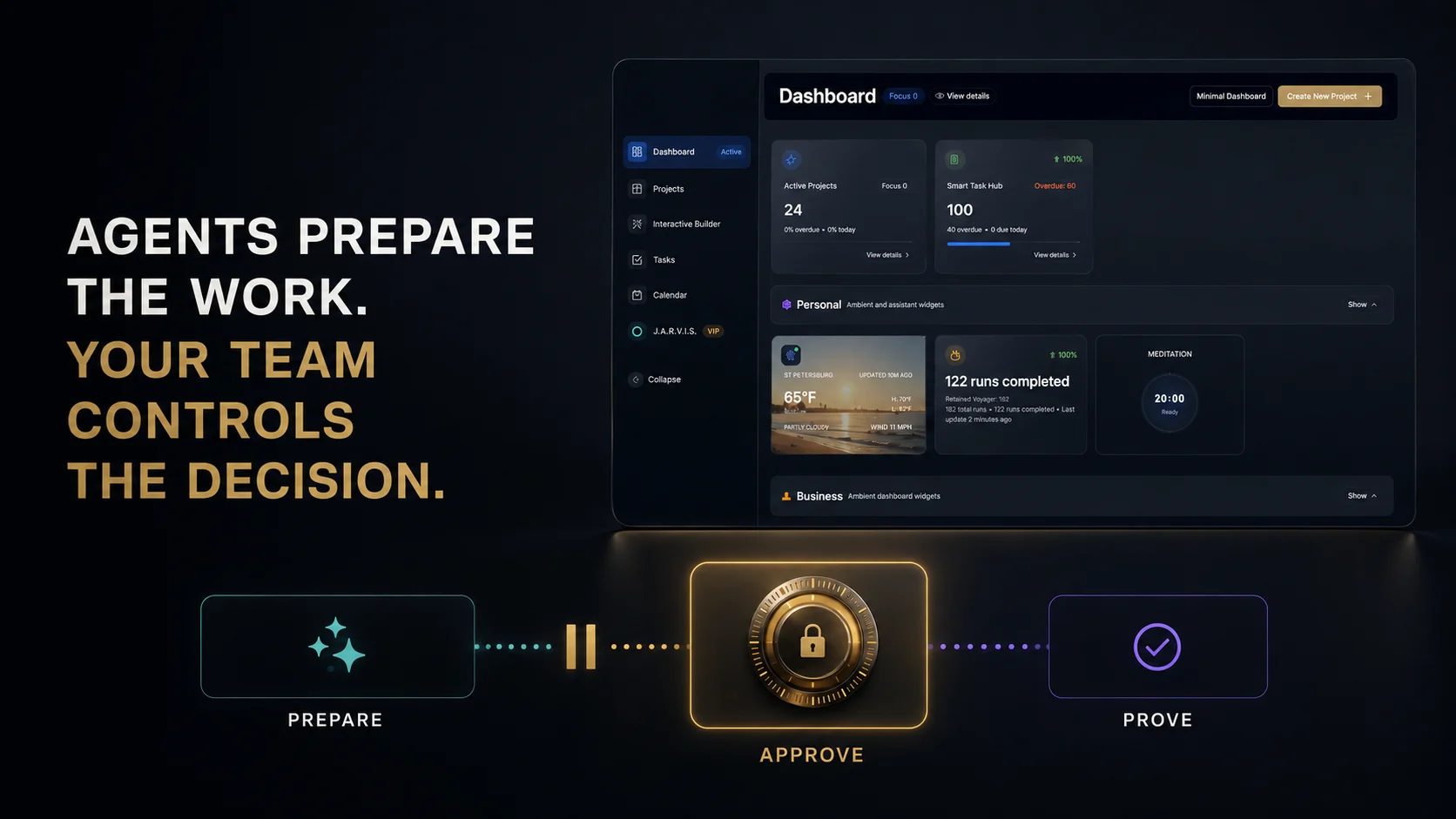
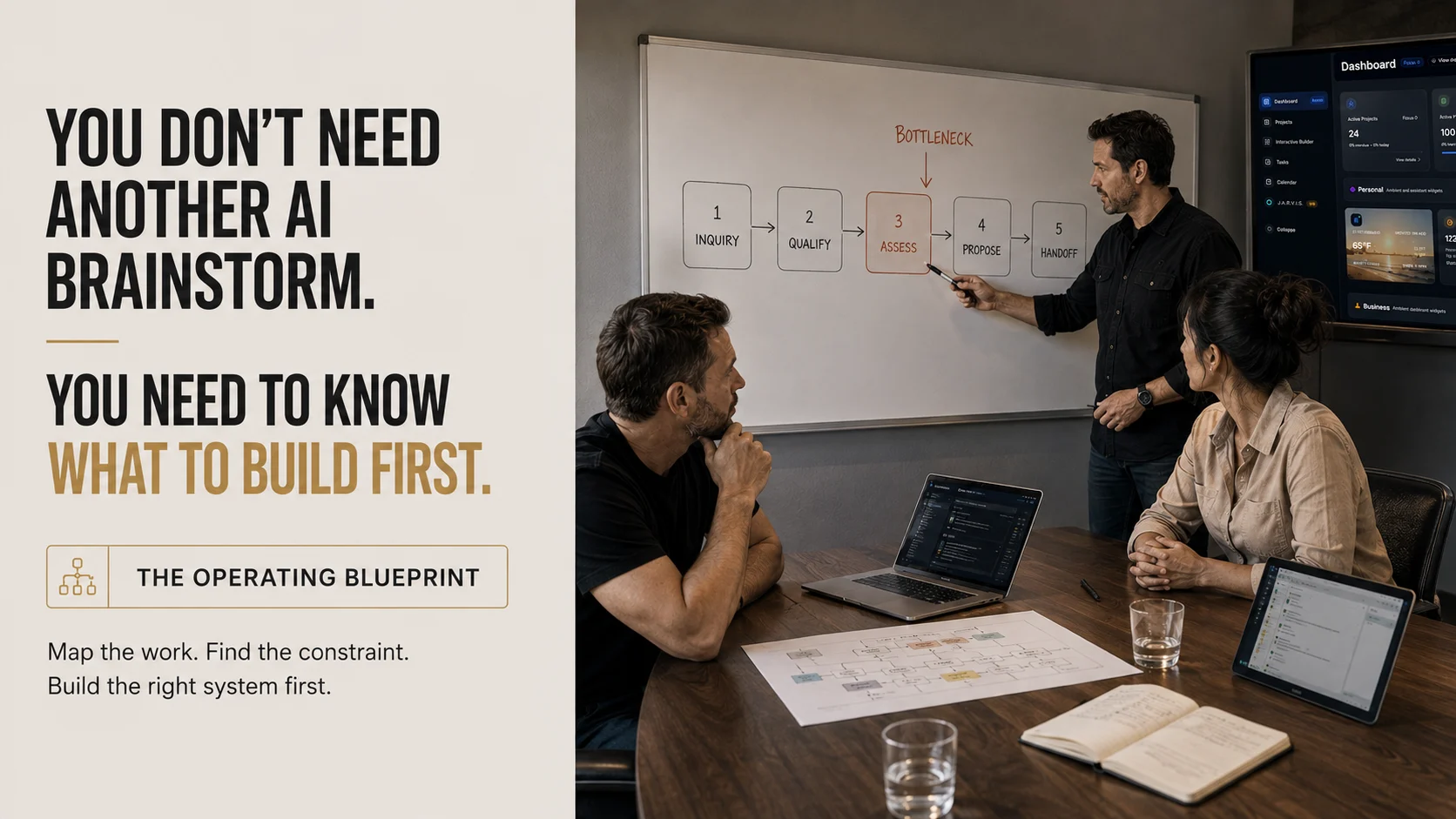
ALCH3MY reviews one high-friction workflow, designs the operating layer around it, and installs the first control-plane path when the value case is clear: intake, memory, agent roles, approvals, receipts, and visibility.

Explore AI Operating Layer

2 weeks · fixed scope

AI Opportunity Sprint

For leaders who know AI matters but need a clean decision process before buying tools or funding a build.

A practical map of the workflows, tools, risks, and first moves most likely to improve visibility or follow-up.

  • Workflow and decision audit across the highest-friction areas
  • Tool and build-vs-buy landscape tied to real operating needs
  • Ranked opportunity map with executive-ready next steps

2–3 weeks · tangible concept

Control Plane Prototype

For teams that need internal buy-in, stakeholder alignment, or a concrete artifact before committing to a larger system.

A polished prototype and narrative package around one high-value operating layer, dashboard, workflow, or decision loop.

  • Use-case framing and product experience strategy
  • Prototype screens or demo flow for the selected system
  • MVP recommendation with scope, assumptions, and rollout path

2 to 6 weeks from review to first control plane

AI Operating Layer Review

For operator-led companies with scattered intake, follow-up, reporting, approvals, or delivery work that AI tools have not actually fixed.

A concrete operating-layer review and, when the use case earns it, a first control-plane loop for one workflow.

  • Workflow pressure map, owner map, tool/context inventory, and trust-boundary review
  • Agent roles, approval gates, memory sources, receipts, and escalation paths defined before build scope
  • First control-plane path: audit, prototype, install, train, and decide what expands
Review the first control-plane path

4–8 weeks · MVP build

Operating Layer Build

For organizations ready to install a first real operating layer after the workflow and value case are clear.

A founder-led buildout of the dashboard, workflow, reporting, or agent layer needed to make the system usable.

  • Core product surface and workflow design
  • Data, tooling, and orchestration design for the selected use case
  • Documentation, handoff, and refinement from real usage

Retained · selective

Intelligence Layer Partnership

For teams with an operating environment worth improving continuously and a strong fit for Peak or future product learning.

Ongoing refinement of systems, workflows, dashboards, and AI-enabled decision support as the work compounds.

  • Monthly operating review and system refinement cadence
  • New workflow or decision-layer improvements as proof emerges
  • Design-partner path where the operating pressure can sharpen Peak

Fit filter

The right buyer wants a sharper workflow, not an AI performance.

ALCH3MY works best when there is live operating pressure, access to the real workflow, and leadership willing to put review, approval, and ownership around the system.

Best fit

Teams with pressure, context, budget, and a real owner.

  • Leadership has a workflow, reporting, intake, delivery, or follow-up problem that keeps resurfacing.
  • Important context is scattered across tools, people, meetings, docs, and messages.
  • The team wants a working control-plane loop with clear ownership, not another generic AI demo.

Not a fit

The work is too vague, performative, or detached from ownership.

  • The goal is “do AI” without exposing the real workflow or decision layer.
  • Automation is expected to replace human judgment instead of supporting it.
  • There is no owner for adoption, review, access, risk, or ongoing operating cadence.

Agent trust boundary

The control plane starts with trust, not implementation volume.

The review defines what AI can see, prepare, and escalate before anything gets installed. Humans approve commitments, external messages, legal or financial decisions, access changes, purchases, and sensitive claims.

DraftRouteSummarizeMonitorHuman approvalReceipts

Delivery logic

The commercial path is a review-to-control-plane sequence.

The package structure is built for serious buyers: diagnose the workflow, make the control plane tangible, install the first loop, then expand only when usage proves it.

01

Clarify the buying decision

Start with the live workflow, the owner, the risk, and the business outcome. Not a generic AI wish list.

02

Make the system tangible

Use a prototype or focused artifact to give leadership something concrete to evaluate before the scope expands.

03

Build the first usable layer

Install the dashboard, workflow, OpenClaw agent layer, or custom surface only after the use case has earned a build.

04

Refine what proves useful

Keep improving the pieces that create real progress and carry repeated patterns forward into Peak.

Buyer-safe entry

The first yes buys a hard review, not a giant platform promise.

The review shows the live workflow, context leaks, governance needs, and first control-plane candidate before a company funds the next step.

Prototype as proof

Make the first loop visible before asking for bigger scope.

The strongest concepts become concrete: an intake router, review queue, Morning Brief, command board, reporting surface, or Peak-aligned execution surface.

Build after evidence

The first 2 to 6 weeks should earn the next build.

If existing tools solve the problem, use them. If the workflow needs a custom layer, the build starts with a sharper case, cleaner trust, and a trained owner.

Best fit

Start with the review when the workflow is real but the operating layer is not yet clear.

The best first step is one live workflow, one owner, one trust boundary, and one control-plane candidate worth proving.

Start the review