
The Demo Is Not The Operating System
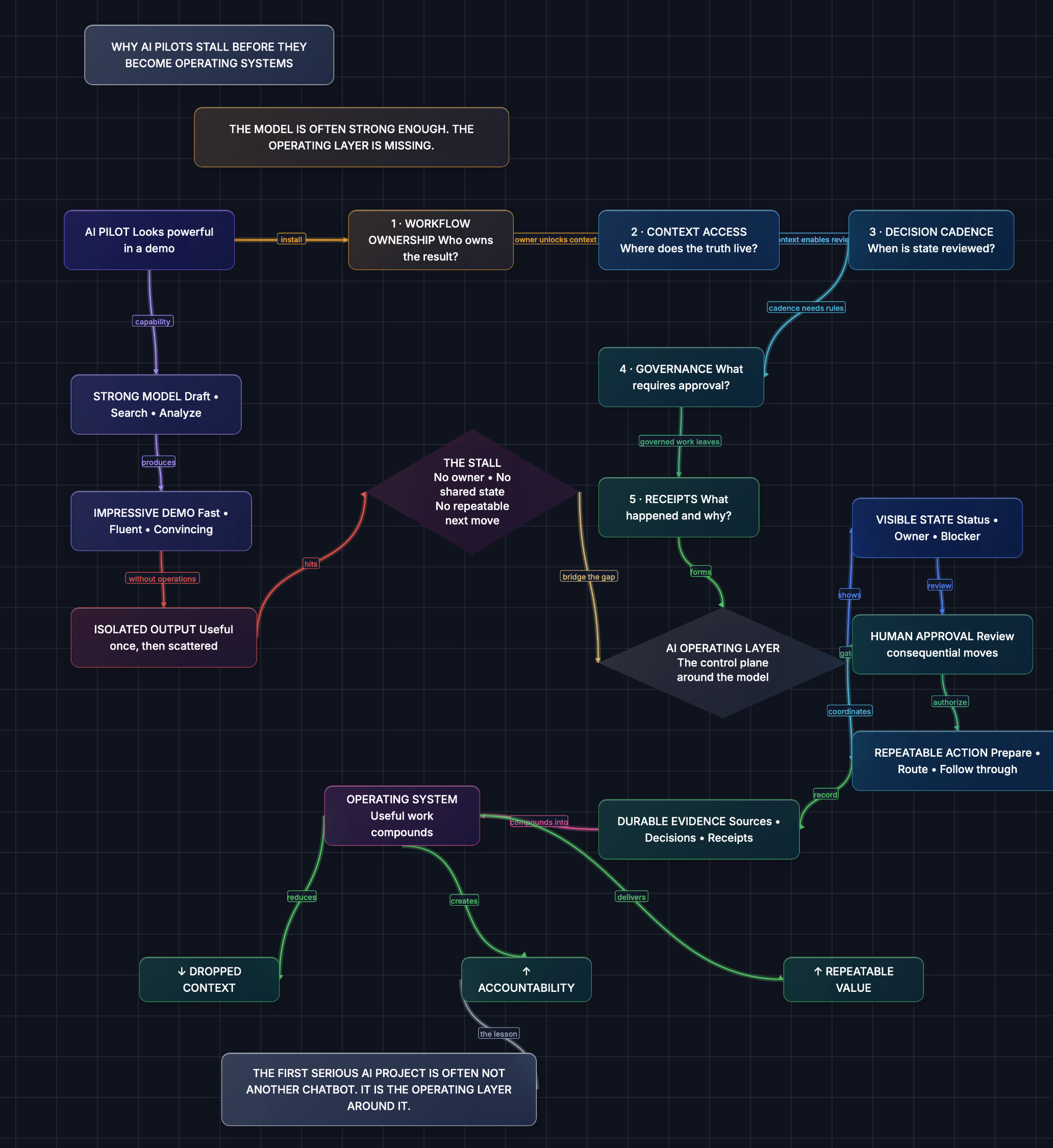
AI pilots usually look better in a demo than they do inside a working company. The model can summarize, draft, search, classify, and suggest, but the work around it is still scattered.
Nobody owns the workflow. Context lives across tools and people. Decisions disappear into meetings. Follow-up depends on memory. Approval rules are unclear. Nothing leaves a useful receipt.
That is why the first serious AI project is often not another chatbot. It is an operating layer.
The Five Layers Usually Missing
A pilot becomes infrastructure only when the company installs the business layer around the model. The missing pieces are usually operational, not magical.
Think of those pieces as the bridge between an impressive demonstration and a dependable operating system. Model capability gets the company to the edge. The operating layer is what carries useful work across the gap and allows it to compound.
- Workflow ownership: a named owner for the business process, not just a tool sponsor.
- Context access: the system knows where the relevant docs, CRM records, messages, tasks, and decisions live.
- Decision cadence: there is a rhythm for reviewing what changed and what needs action.
- Governance: agents can prepare, summarize, draft, triage, and route while humans approve external moves and sensitive commitments.
- Receipts: the system records sources, recommendations, actions, blockers, and handoffs.
What A First Control Plane Actually Shows
A useful first control plane should not be a prettier dashboard for its own sake. It should show the state of one real workflow in a way people can trust.
The first version should make status, next actions, blockers, ownership, recent changes, and approval needs visible. It should reduce dropped context and make the next move easier to inspect.
Why Humans Stay In The Approval Loop
The goal is not autonomous theater. Serious teams need agents that prepare work and humans who approve the moves that carry real business risk.
External messages, commitments, access changes, legal or financial decisions, purchases, and sensitive claims should stay behind review. That boundary is not a weakness. It is what lets a company use agents without pretending risk disappeared.
Start With One Workflow
The safest path is one live operating area with a real owner and repeated pain. Map the workflow, score the readiness signals, identify the first control-plane candidate, install a review loop, and leave receipts.
Expand only when the first layer proves useful. AI adoption compounds when the company learns how to run the work around the tools.
If your team has AI activity but no way to run the work around it, start with the operating layer. ALCH3MY reviews one live operating area, scores the readiness signals, and recommends the first layer worth installing: diagnostic, prototype, installation, or hold.