

A character is more than a face
Clothing communicates identity, purpose, and the world that character belongs to. At ALCH3MY, we’re exploring how digital clothing can become more than a fixed asset: something we can eventually adjust, configure, and reuse across character designs.
Our latest work brings garment and equipment prototypes into Unreal Engine as part of our exploration with MetaHumans. It’s a step toward a larger goal: parametrically designed digital clothing.
From a complete look to its individual pieces
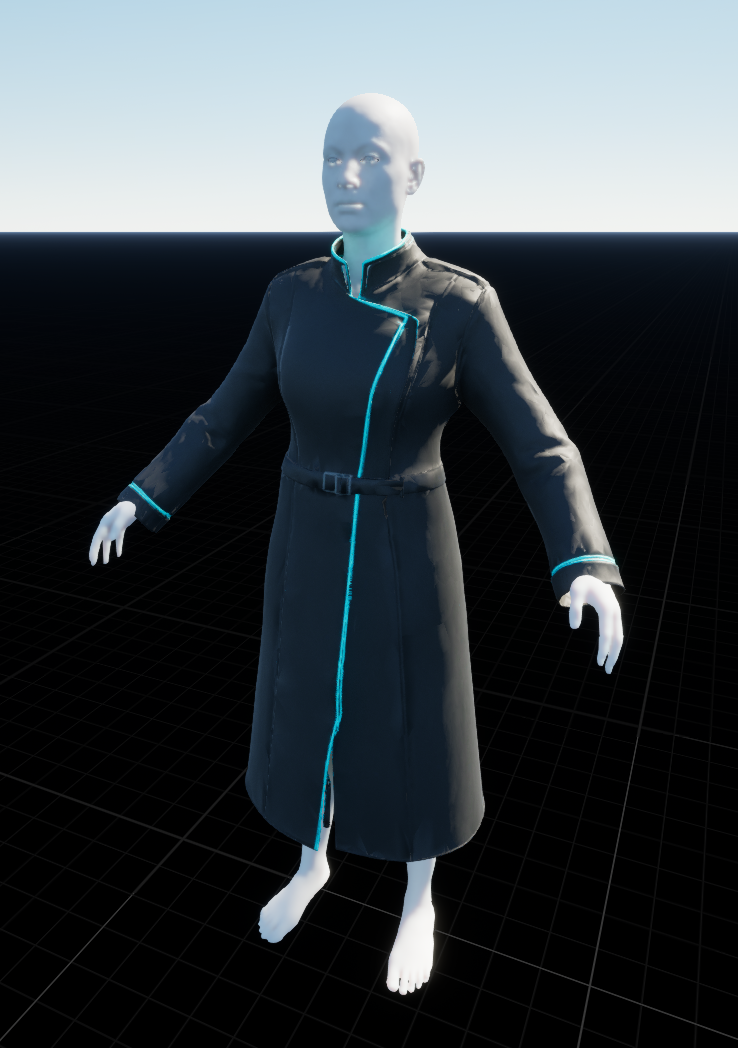
The current prototypes explore two different directions. One is a dark, structured coat with an asymmetrical front, high collar, belted waist, and bright cyan accents. It’s an exploration of silhouette and visual identity—how a few deliberate details can define a character’s look.
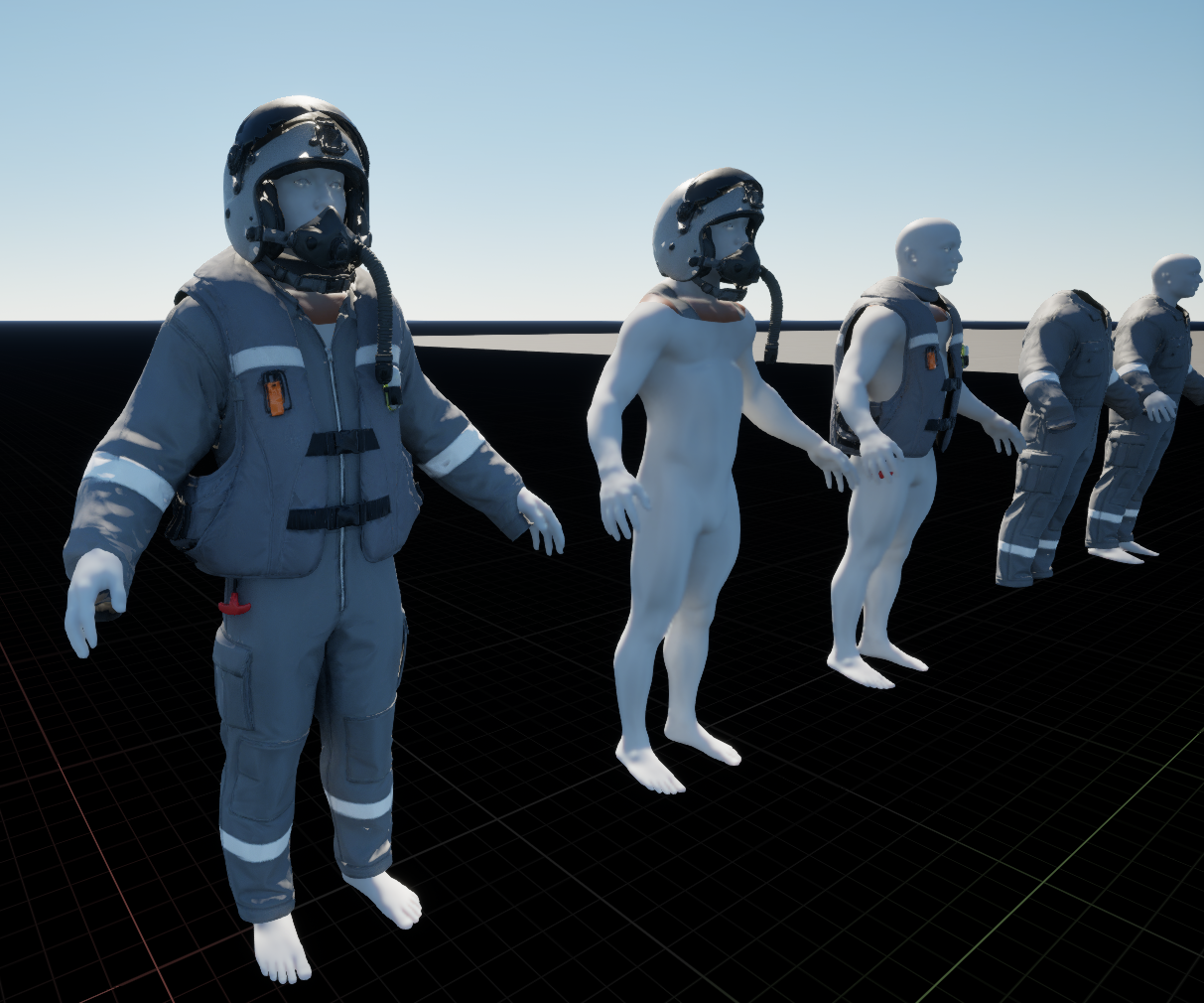
The other is a flight-suit concept, shown both as a complete outfit and through separate clothing and equipment studies. Viewed together, the pieces make an important design question visible: What if a character’s wardrobe could be treated as a configurable system, rather than a succession of one-off models?
That is the direction we’re working toward.
What we mean by parametric clothing
Parametric design uses defined controls and relationships to shape an object. For digital clothing, that could mean adjusting a garment’s length, sleeve proportions, collar shape, or fit through a structured set of parameters. Related design choices—such as materials, trim, and accessories—could sit alongside those controls.
The ambition is to preserve a garment’s design language while making meaningful variations easier to explore. These screenshots show development prototypes, not a finished parametric clothing system. The work ahead is connecting visual design with repeatable controls, dependable geometry, and validation on the characters wearing it.
Why Unreal Engine and MetaHuman?
Unreal Engine provides a real-time environment for examining clothing in the context of a character and a scene. Our MetaHuman exploration gives that work a practical focus: garments need to make sense on a digital person, not just as isolated objects.
Bringing a design into the engine also exposes the next questions. How does the silhouette read from different angles? Where does the garment intersect the body? What will need to change when the character moves?
A convincing still image is a milestone. Reliable fit, deformation, and movement are further milestones to earn.
Where we’re heading
We’re interested in a future where creating a digital wardrobe involves less rebuilding and more intentional variation. That could support character development, virtual production, interactive experiences, and digital fashion exploration.
The immediate focus is narrower: understanding the garments, refining the workflow, and identifying which aspects can become genuinely controllable and reusable. The goal isn’t simply to make more clothes for digital characters. It’s to build a better way to design them.
We’ll share more as the work develops.